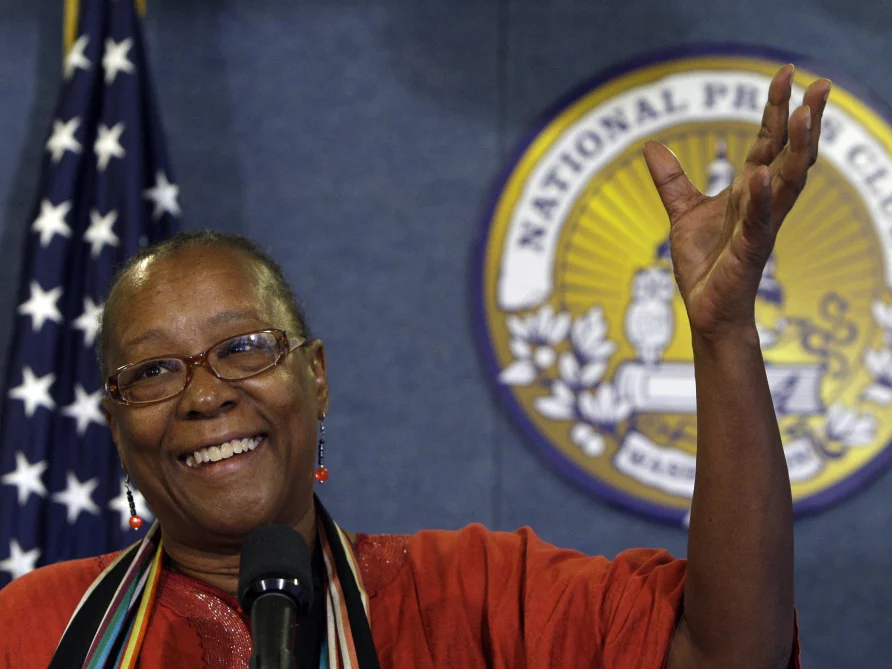
Bertha Lewis
Part 1 —
March 19, 2023
Interviewed by Lindsay Zafir
Part 2 —
April 29, 2023
Interviewed by Lindsay Zafir
Part 3 —
June 24, 2023
Interviewed by Lindsay Zafir
Part 1 — 3/19/2023
This is Part 1 of Bertha Lewis’ oral history interview: Bertha Lewis is a longtime community organizer. She started at ACORN as a Housing Counselor before becoming a Head Organizer in the Brooklyn, NY, office, and later becoming the Chief Organizer and CEO of national ACORN. In this interview, Lewis talks about moving to New York to pursue a theater career, her entry into community organizing and her early experiences in the Brooklyn ACORN chapter, the ACORN organizing model, and her relationship with her mentor Jon Kest. She also discusses racial and gender inequities within ACORN and the formation of the Caucus of Color.
Part 2 — 4/29/2023
This is Part 2 of Bertha Lewis’ oral history interview: Bertha Lewis is a longtime community organizer. She started at ACORN as a Housing Counselor before becoming a Head Organizer in the Brooklyn, NY, office, and later becoming the Chief Organizer and CEO of national ACORN. In this interview, Lewis primarily talks about her childhood in South (and later Southwest) Philadelphia in the 1950s and 1960s and how it shaped her future work in ACORN. She also discusses her experiences on ACORN staff as a Black woman and what it was like to take over leadership of a white-led organization during a moment of crisis. Lewis touches on race and class dynamics in ACORN, the organization’s relationship with its funders, and the importance of institutionalizing wins (using the Willets Point campaign as an example). She also discusses the importance of teaching organizing as a science and profession.
Part 3 — 6/24/2023
This is Part 3 of Bertha Lewis’ oral history interview: Bertha Lewis is a longtime community organizer. She started at ACORN as a Housing Counselor before becoming a Head Organizer in the Brooklyn, NY, office, and later becoming the Chief Organizer and CEO of national ACORN. In this interview, Lewis talks about various campaigns she considered significant. She begins on the topic of housing work, and how it differed under Mayor David Dinkins–when they were able to build membership and organizing–and under Mayor Giuliani, who did not support their work. She shares about how the Giuliani administration was destructive to ACORN, but they were resilient. She discusses changing strategies under different administrations. She speaks about housing as a core area of focus and often, success, for ACORN. She also speaks about the organization’s electoral strategies, their living wage campaign, and more. She says that “organizer” used to be considered a bad word, while now it’s culturally and socially acceptable–even elevated, taught at universities, etc. She beleives ACORN paved the way for that. Lewis also discusses how ACORN suffered from the same ills broader society did at the time. She writes, “So when people write the history of ACORN, it is the women, of this country, of this city, of this state, of the chapters, that built ACORN and it was the women organizers that did most of the work. So no disrespect, fellas! [Laughs] You know, but we were never, it’s funny—we were never considered a women’s organization. And we were never considered a Black or brown organization. So when, you, you know, let’s look at that, uh, you know that to me is a fatal flaw.” She then talks about the relationship between the staff, the board and the membership––who had decision-making power, etc. She also speaks about ACORN as a “canary in the coalmine” in terms of how the Right went about attacking them. Lewis ends this interview with lessons to pass on, including but not limited to: Pay attention internally and extermally because vulnerabilities will first surface internally, all money isn’t good money, and institutionalize your wins.