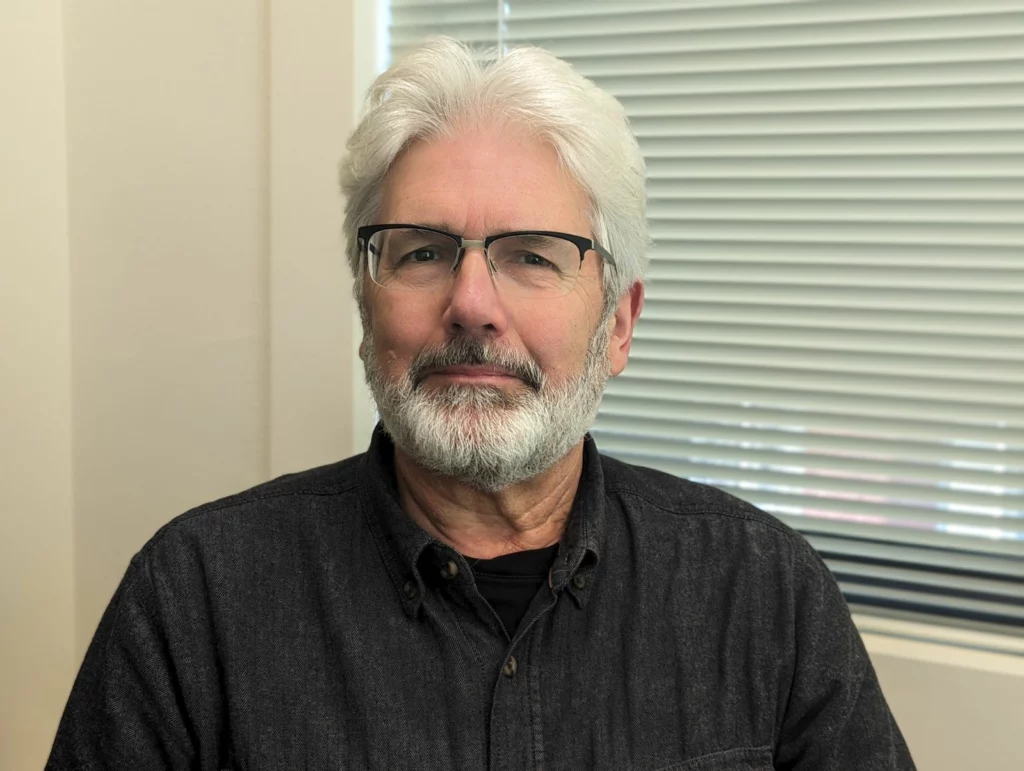
Mike Shea
Part 1 —
November 15, 2023
Interviewed by Judith McCray
Part 2 —
January 17, 2024
Interviewed by Judith McCray
Part 1 — 11/15/2023
This is Part 1 of Mike Shea’s oral history interview: Mike Shea joined ACORN as a member in 1976, first in Houston, briefly in Little Rock, and then in Denver to become head organizer. In 1983, he moved to New Orleans as regional director before taking national positions addressing housing. In this interview, he talks about the strategies behind the squatting campaigns that led to the forming of the ACORN Housing Corporation (AHC). He was the first executive director in 1984 and remained through 2010 with the demise of ACORN. He talks about actions and strategies used by AHC to build relationships with banks by pressuring implementation of the Community Reinvestment Act to bring mortgages into low income neighborhoods and acquistion of housing properties as the successful result of nationwide squatting actions. This interview may be of interest to those who want to learn about the strategies behind a several decade housing program, addressing race and working across racial boundaries, and the demise of ACORN and personal reflections on problems that led to Wade Rathke’s firing.
Part 2 — 1/17/2024
This is Part 2 of Mike Shea’s oral history interview: In addition to his many years as an ACORN organizer in Little Rock, AK, Denver, CO and New Orleans as National Campaign Director, Mike Shea was the Founding Executive Director of ACORN Housing Services (1985-2009) and the rebranded (after ACORN was de-funded) Affordable Housing Centers of America (2009-2012). In this second interview, Mike details his work in ACORN following the passage of the Community Reinvestment Act (CRA) which led to the deregulation of interstate banking and crafting of agreements with merging banks to creating homeownership programs and mortgage lending for low-income families, especially Black and Latino families. In this interview, Mike details 3 major CRA agreements: 1. Nations Bank/Bank of America (1988), 2. Chemico NY/Chase Bank merger and 3. the Citibank program that opened up mortgage lending to migrants. Not only did these actions open up mortgage lending for people of color, but it opened the door to changing internal banking cultures in which women and people of color were not only hired, but held leadership roles in lending negotiations. He also describes how AHS was the “canary in the coal mine” at the beginning of the refinancing schemes foisted on low-income families that led to the predatory lending actions that displaced many Americans from their homes and toppled the U.S. and world economies in 2007/2008. This interview will be of interest to anyone researching reforms in the banking industry in mortgage lending to people of color led by AHS, mortgage refinancing, and the earliest stages of predatory lending.